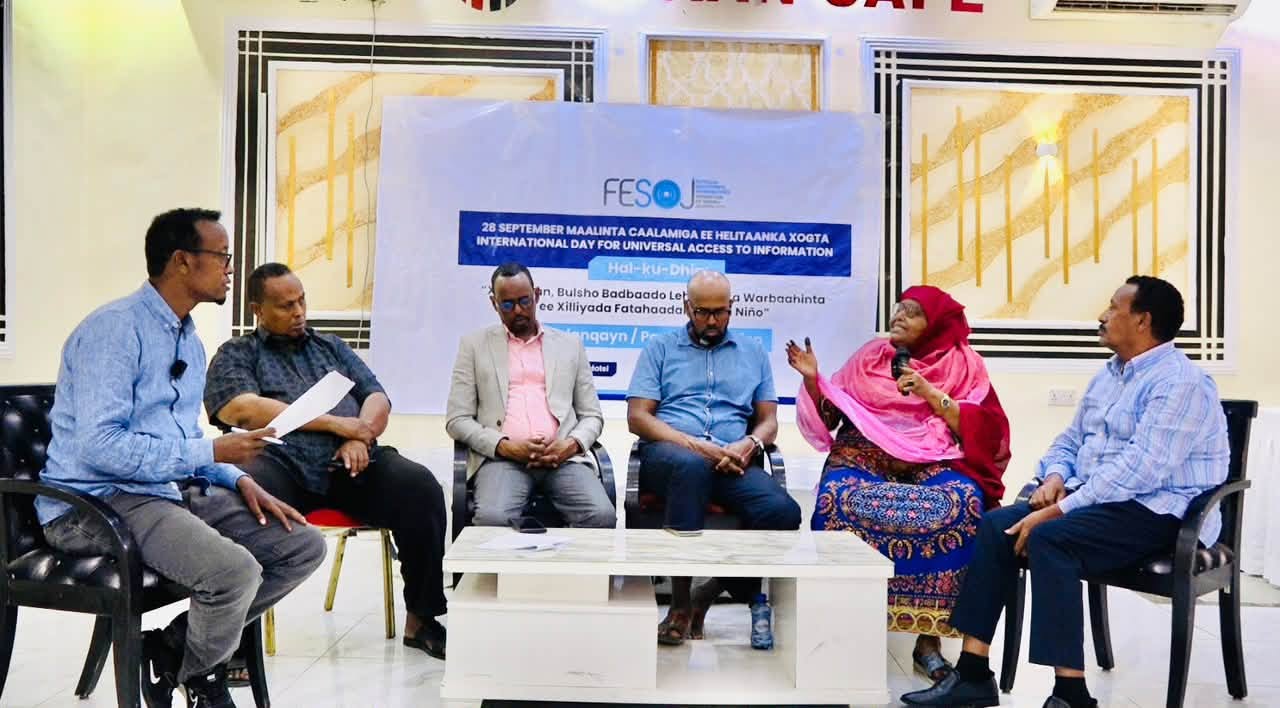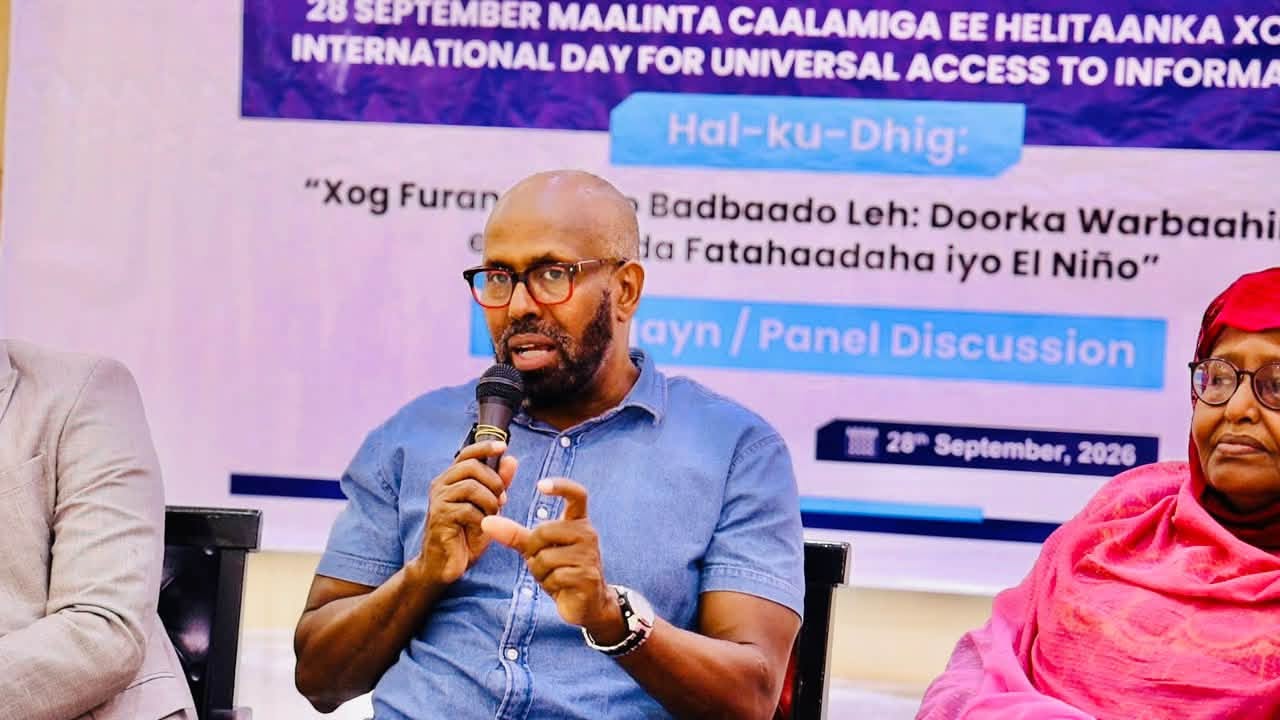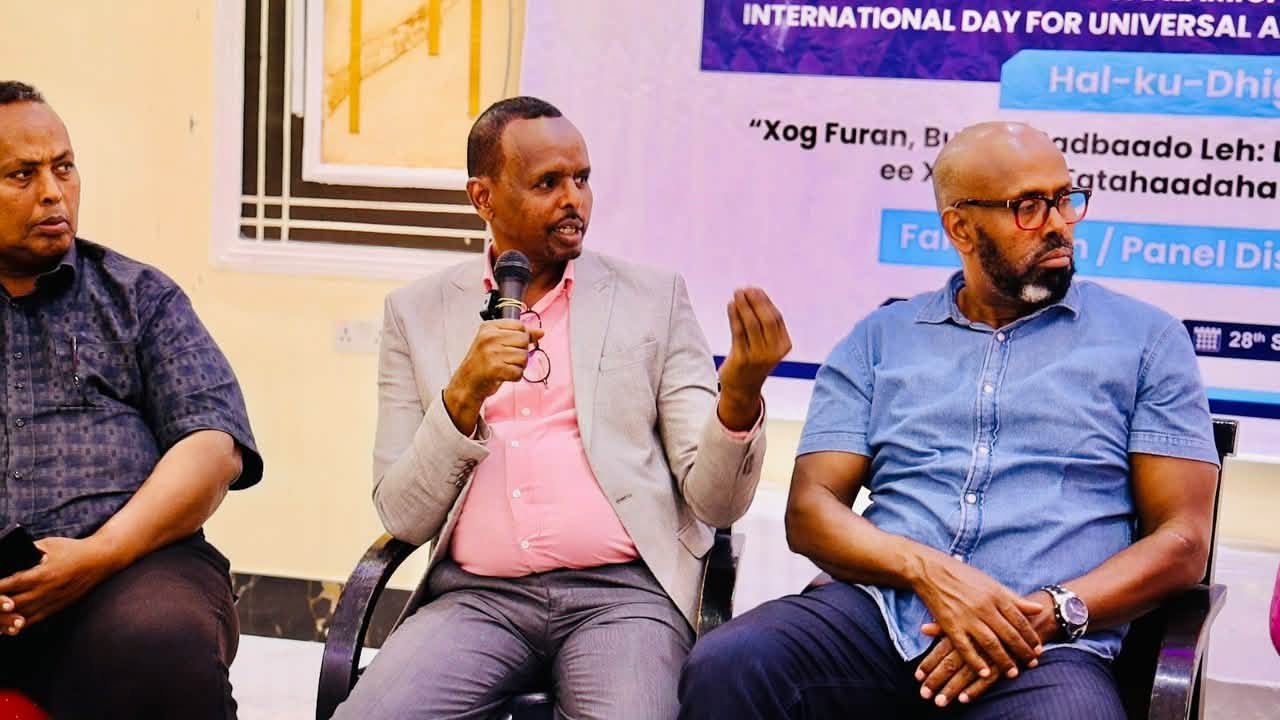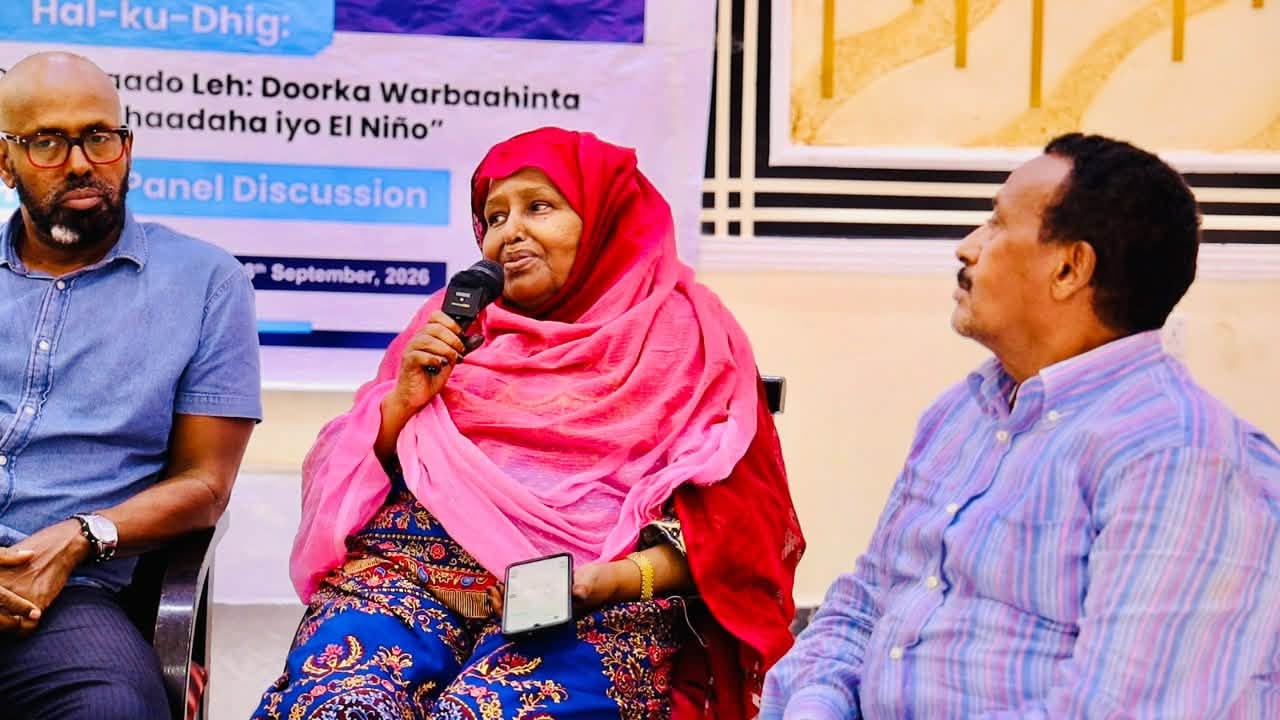

Mogadishu, September 28, 2026 – The Federation of Somali Journalists (FESOJ) organized a panel discussion in Mogadishu to mark the International Day for Universal Access to Information (IDUAI) 2026, bringing together senior journalists, civil society representatives and stakeholders involved in disaster preparedness and public information.
Held at Hotel Rayaan, the discussion brought together representatives from civil society, FESOJ, the National Emergency Operations Centre (NEOC) under the Somali Disaster Management Agency (SODMA), senior journalists and the VIKES Somalia Programme. The event aimed to promote public access to timely and reliable information while highlighting the critical role of the media in raising community awareness about the impacts of the Deyr rainy season and related humanitarian and environmental challenges.
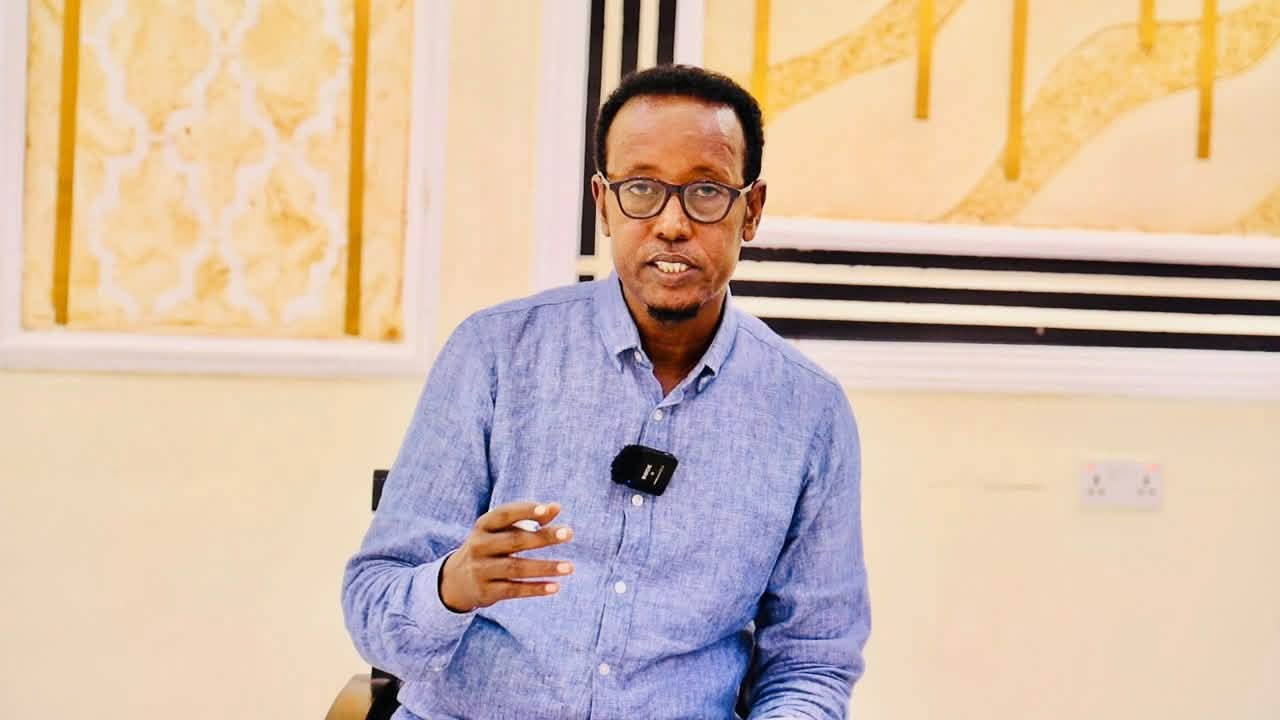
The discussion was moderated by senior freelance journalist Abdinasir Iidle and opened with a presentation by Ahmed Mohamed Ali Sharif, Head of FESOJ’s Training Department, who outlined the objectives of the event and the role of Somali journalists in facilitating access to reliable information. He also highlighted Somalia’s constitutional provisions concerning freedom of expression and access to information.
The panel explored the importance of access to information for journalists, Somalia’s constitutional framework, key principles and benefits of access to information, and FESOJ’s role in strengthening journalists’ capacity. A central question was how government institutions, the media, civil society and other stakeholders can ensure that vital information reaches communities when it is most needed.
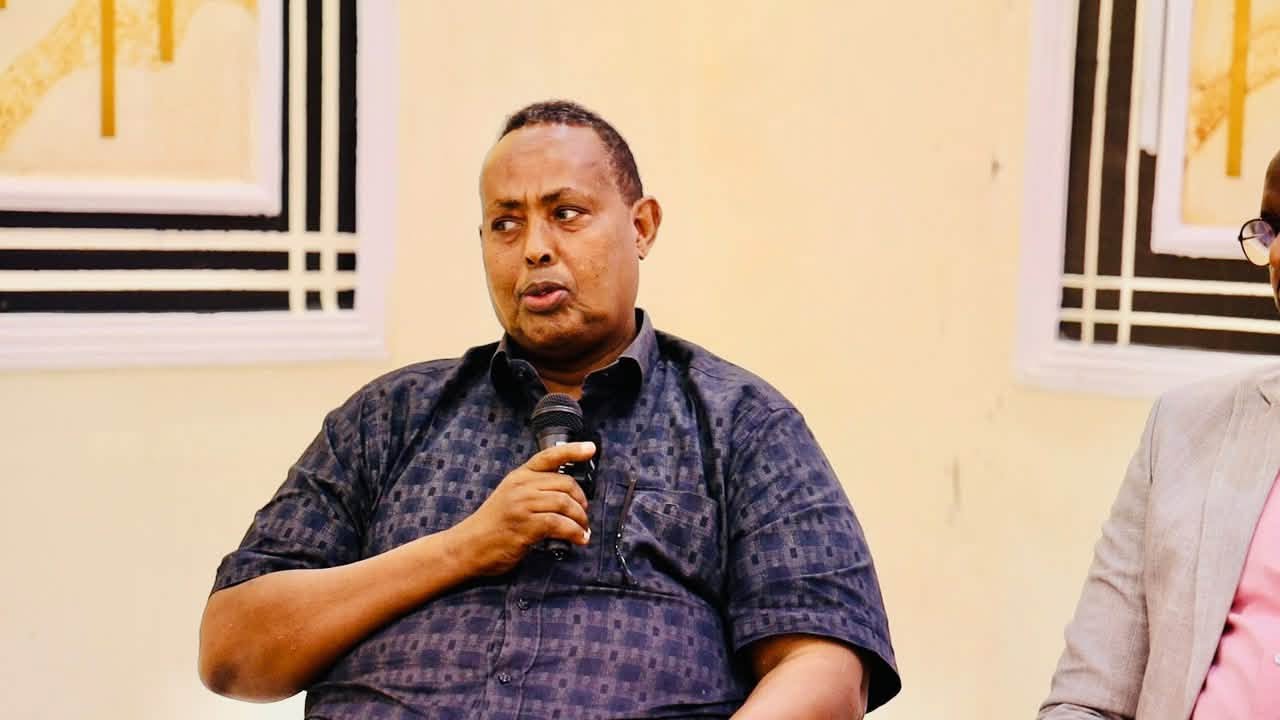
Hassan Abdulkadir Isse, General Manager of the National Emergency Operations Centre (NEOC), said that following initial forecasts of possible El Niño conditions in June 2026, efforts were undertaken to mobilize communities, government institutions and partners to strengthen preparedness.
“We coordinated relevant ministries and SODMA to ensure consistent official information, reduce public confusion, and support community preparedness and early action,” Isse said.
Duniya Mohamed Ali, a civil society leader, highlighted collaboration among civil society organizations, government institutions and Federal Member States through joint committees assessing El Niño impacts across 29 affected districts according to severity, while also establishing channels through which information can be received directly from communities.
Wali Hassan Hashi, VIKES Somalia Programme Coordinator, commended FESOJ for organizing the discussion and stressed the importance of providing accurate information before emergencies occur. “Relying on accurate information only after an event has occurred is not ideal—it is far better to provide it in anticipation of such events, so that comprehensive preparation can begin,” he said.
Veteran journalist Abdirahman Rooble Ula Yare highlighted continuing challenges in accessing reliable information. He noted that while approximately 70% of the required data has been secured, obtaining the remaining information requires stronger coordination between government institutions and the media, as well as adequate resources to access and verify official data.
Concluding the discussion, Ahmed Mohamed Ali Sharif highlighted FESOJ’s efforts, with support from VIKES, to strengthen the capacity of journalists from Bosaso to Kismayo in environmental and climate-related reporting. He said trained journalists across regions and districts can contribute to providing communities with accurate information and strengthen reporting on anticipated El Niño conditions.
The discussion also heard from Halima Diriye, a Somali mother who lost household belongings during the 2024 river floods in Beledweyne, Hirshabelle State. Drawing on her experience, she emphasized the importance of timely early-warning information that enables families to prepare and move to safer areas before flooding occurs.
As part of FESOJ’s observance of IDUAI 2026, Tom Van Nuffelen, Project Manager & Liaison Officer at UNESCO Somalia, contributed a short video message highlighting the importance of access to information, responsible journalism and public awareness. His message reinforced the role of timely, accurate and accessible information in helping communities make informed decisions, particularly during emergencies.