FESOJ Wraps Up Disability Journalism Training with Support from VIKES
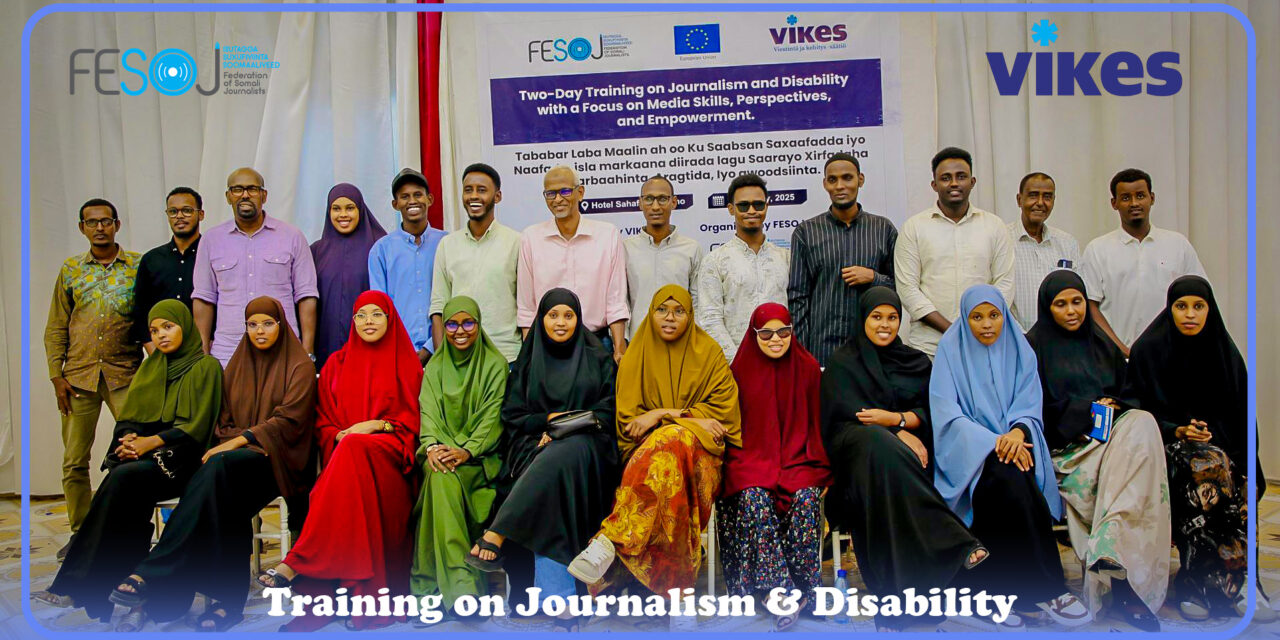
Mogadishu City, July 21, 2025: The Federation of Somali Journalists (FESOJ) has concluded a two- day training on journalism and disability with focus on media skills, perspectives and empowerment in Mogadishu city that have been conducted with the support of Finnish foundation for Media and Development (VIKES).
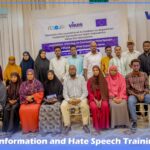
Thirty participants in attendance of the training were journalists and people with disabilities from the faculty of Journalism, Somali National University (SNU), Lecturer, Somali National University (SNU), Somali Disable Umbrella (SDU), Somali Visually Impaired Youth Organization (UDHAN), Somali National Association of the Deaf (SONAD), Hamar Press Newspaper, SDO, Disability Inclusion Network Alliance (DINA) and Freelancer.
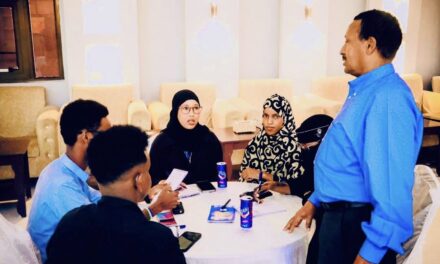
The participants have benefited from the training on journalism and disability, emphasizing media skills, inclusive perspectives, and empowerment have been in progress from 14th to 15th July 2025 at Sahafi Hotel in Mogadishu city, Somalia.
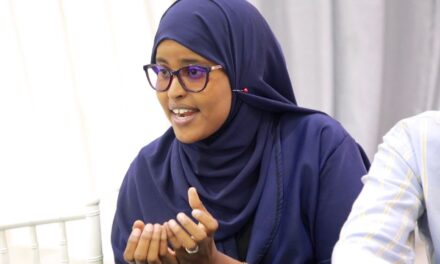
Senior trainers from FESOJ, VIKES and CAFIS have been facilitating presentations focusing on main themes including Inclusive media, the intention and the role of media on how to formulate the public view about the people with disabilities.
In his opening remarks, Wali Hashi, VIKES representative in Somalia pointed out “The intention of the training is to empower both journalists and persons with disabilities through knowledge sharing and advocacy for inclusive representation in the media sector.”
Farah Omar Nur, FESOJ Secretary General indicated the significance of the training program mainly is focusing on how to improve the media skills of journalists in reporting on disability-related issues accurately and ethically.
On his part, Mohamed Mohamud Adde, Chairperson of CAFIS organization and senior media trainer has highlighted the training program is aiming to promote inclusive perspectives in media content by challenging stereotypes and fostering understanding of the rights and experiences of persons with disabilities.
During the two- day training proceedings, the participants have been taken through significant topics including: Introduction to Disability Rights and Inclusion, Ethical and Inclusive Reporting, media skills development, voices of persons with disabilities and advocacy and empowerment through the media.
Then, a presentation was delivered focusing on the practical aspects of interviewing persons with disabilities, highlighting why such interactions require special attention, sensitivity, and ethical considerations.
For discussion purposes, a video clip produced by a visually impaired journalist was screened. The clip featured a powerful and emotional story of a visually impaired young girl who experienced arranged marriage, early pregnancy, and subsequent divorce—illustrating the serious violations of her fundamental human rights.
In conclusion, Farah Omar Nur, Secretary General of FESOJ, emphasized that participants are expected to benefit significantly from the two-day training, particularly the practical guidelines provided. He highlighted the importance of empowering journalists with disabilities, noting that with the right support and opportunities, they can demonstrate their full potential and overcome the marginalization they have historically faced.
“There is a need to develop engaging, meaningful, and actionable media programs aimed at raising public awareness,” he stated.
In his closing remarks, Mr. Wali Hashi, VIKES Representative in Somalia, expressed his gratitude to all participants for their active engagement throughout the training. He noted that the sessions were productive and concluded successfully. Mr. Hashi also commended FESOJ and CAFIS for their excellent cooperation and collaboration in organizing the program.