
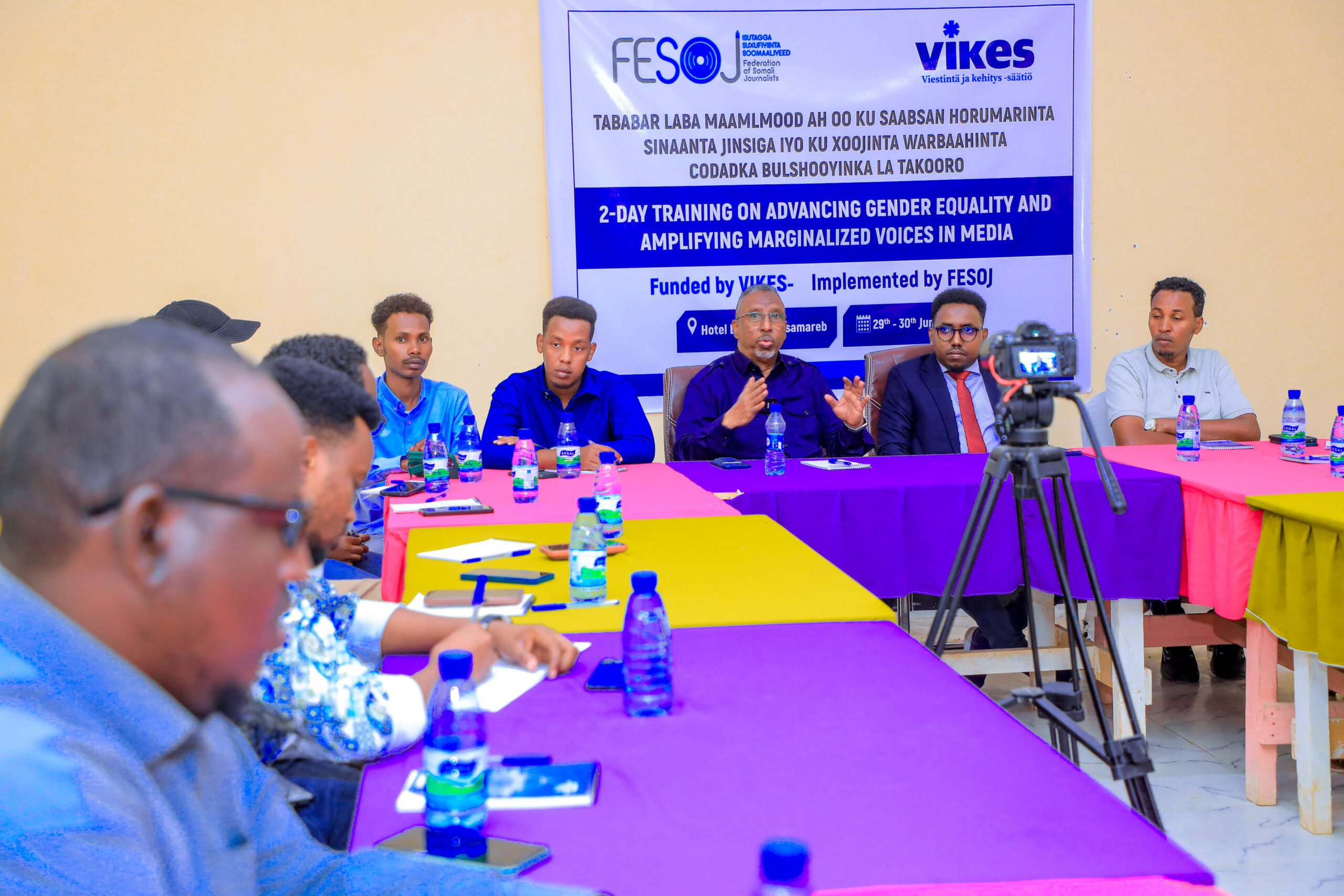
Dhusamareb, Somalia | July 6, 2026: The Federation of Somali Journalists (FESOJ), with support from the Finnish Foundation for Media and Development (VIKES), has successfully concluded a two day capacity building training on strengthening gender equality and amplifying marginalized voices in the media. The training took place from 29 to 30 June 2026 in Dhusamareb, Galmudug State, Somalia.
The training brought together 20 participants, including journalists from Radio Daardheer, Radio Dayah, Radio Ergo, Galmudug TV, Shabelle TV, SNTV, freelance journalists, and representatives from the Galmudug Disability Organization (GALDO). The initiative aimed to enhance journalists’ capacity to produce inclusive, gender sensitive, and ethical reporting that reflects the diversity of society and strengthens the representation of underrepresented communities.
Speaking at the opening session, Galmudug Minister of Information, Ali Mohamud Seeko, highlighted the importance of strengthening journalists’ professional skills in covering gender equality issues and ensuring that marginalized groups receive fair and meaningful representation in the media.
Mohamed Osman Beeray, Secretary General of the Galmudug Journalists Association (GALJA), encouraged participants to utilize the knowledge gained from the training to promote responsible journalism. He emphasized the need for journalists to produce accurate, balanced, and inclusive stories that challenge stereotypes and contribute to greater public awareness.
During the sessions, Hassan Mohamed Dahir, FESOJ representative and journalism trainer, emphasized the critical role of the media in promoting equality, social inclusion, and public participation. The training covered key areas including understanding gender equality, gender gaps in Somalia, the role of media in advancing inclusion, ethical reporting, and strategies for amplifying the voices of marginalized communities.
The training also provided participants with practical group exercises and discussions on existing gender related challenges in Somalia and how journalists can contribute to addressing harmful stereotypes through professional reporting. Participants reflected on the importance of inclusive storytelling that gives visibility to women, persons with disabilities, and other underrepresented groups.
Reflecting on the training, Faduma Esse Hersi, a journalist from Galmudug TV, noted that the sessions strengthened her understanding of gender sensitive journalism and the importance of ensuring that marginalized communities are included in media narratives. Mohamed Abdi Mohamed from SNTV also highlighted that the training reinforced the media’s responsibility in promoting equality, protecting human rights, and ensuring diverse voices are represented.
Closing the training, Hassan Dahir commended the commitment of the participating journalists, including seven women and thirteen men, and encouraged them to apply the knowledge and skills gained in their daily reporting. “The training was highly valuable, and I encourage participants to put these skills into practice so that the impact can be reflected through their journalism,” he said.
The training was implemented by the Federation of Somali Journalists (FESOJ) with support from the Finnish Foundation for Media and Development (VIKES), as part of ongoing efforts to strengthen professional journalism, promote media inclusion, and support a more diverse and representative media environment in Somalia.